
Blast Off Abrasive Sandblasting Cabinets
Made in Australia since 1990.
Over 1,000 units sold!
Every industry needs a leader... Blast Off Abrasive Cabinets!
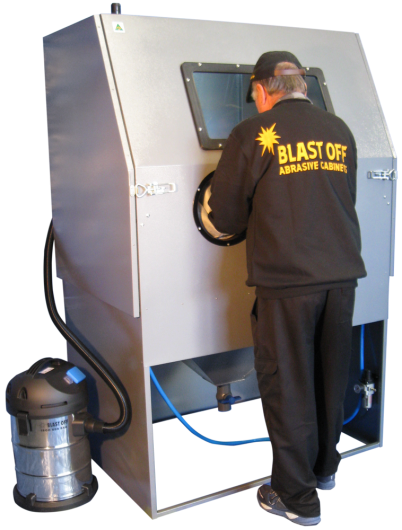
Comprehensive range of spare parts and accessories always in stock
Why Buy Blast Off?
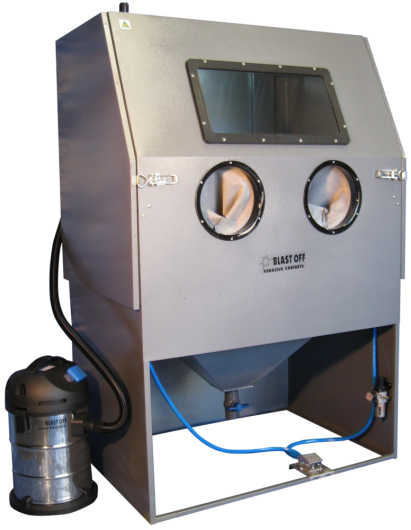
Buy direct from the manufacturer and save
Professional results within minutes
Easy removal of paint, rust and surface contaminants
Low air consumption. High velocity performance
Maximum operator safety and comfort
A model to suit absolutely every application
WorkCover, OH&S and EPA compliant
HEPA filtered dust extraction... FREE with every new unit
Glass beads or garnet… FREE with every new unit
The Benefits of Sandblasting
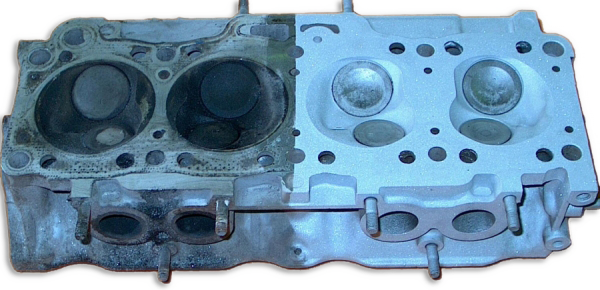
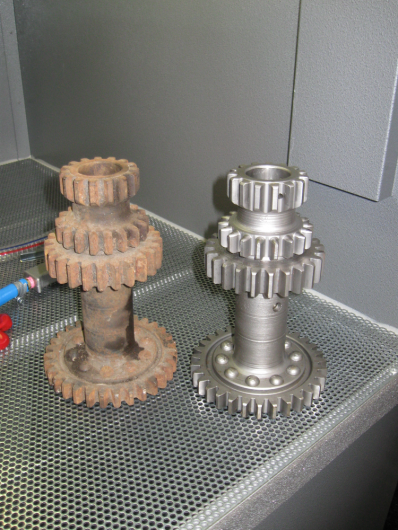
The images provide an indicative feel for the high quality results you can achieve when using a Blast Off abrasive cabinet to sandblast almost any imaginable automotive or industrial part or component. A sandblasting cabinet is a necessity in any workshop undertaking restoration or manufacturing requiring items undergo surface preparation.
The process is environmentally safe allowing you to remove paint, carbon, rust and other surface contaminants fast and easy, in a contained, controlled environment, without the use of hazardous toxic chemicals.
The results speak for themselves.
Frequently Asked Questions
-
A abrasive blasting cabinet is a fully enclosed system designed to clean a wide variety of parts, components and materials in preparation for surface coating. An abrasive media is blasted onto the surface of the item to remove paint, scale, rust and other similar contaminants. The media is captured and reused and the debris is removed from the enclosed cabinet via a filtered dust extractor. To ensure a professional result is achieved, a sandblasting cabinet must have an adequately sized viewing window, a bright internal light, heavy duty, blast resistant operator gloves, a suitable work floor, an airtight sealed door and an air/media supply system.
-
No, sand should never be used. 'Sandblasting' is a generic expression … and there is a variety of blasting mediums for specific applications, far safer and more suitable than sand. Mediums such as glass beads, crushed glass, garnet, starulite, aluminium oxide and various plastic media options are readily available and in all cases the media can be recycled many, many times.
-
'Soda' (sodium bicarbonate) is far too gentle for most automotive and/or industrial applications … and it can only be used once. 'Soda' does not remove rust nor stains, is considerably more expensive to use, and leaves a film on the surface that will react with most coating processes.
-
Spherical glass beads are considered by many to be the best all-around media. It is available in several graded sizes … and the bonus is, glass beads can be recycled hundreds of times. Crushed glass and garnet have crystals with sharp edges that cut faster and etch the surface, but they breakdown sooner than glass beads into dust. Aluminium oxide, another effective medium, stays sharp the longest, but is more expensive to buy.
-
Commence blasting at a 45-60 degree angle, working towards fresh surface area. An operating pressure of 80-90 psi (6 bar) is recommended, whilst holding the blasting gun approximately 150-200mm away from the item. More fragile objects can be blasted as low as 60 psi, or alternatively simply hold the blasting gun further away from the item. For best results, grease, dirt and similar contaminants should be removed before commencing the process.
-
When it comes to air consumption, all Blast Off Abrasive Cabinets are extremely efficient and can operate with as little as 8 cfm. However, many owners with single phase powered (240v) compressors use our medium air-jet/nozzle combination which works well on 12-15 cfm.
Our larger air-jet/nozzle combination requires 20-25 cfm … and more air will allow you to work faster using a 3 phase compressor. We also have an optional high production blast gun that requires 30+ cfm.
It should be noted that most other sandblasting systems designed for commercial application, require twice the air levels of the Blast Off equivalent.
-
Probably not … as the old paint, rust and related contaminants are blasted off as ultrafine dust particles, too small to be captured by most household/workshop vacuum cleaners. We highly recommend the use of a HEPA filtered unit with a pre-filter … AND for both components to be cleaned on a regular basis. This will ensure that visibility is maintained, and that only clean air is expelled into your home or workshop environment during the 'sandblasting' process.